Every repair we do starts long before anyone touches the concrete. It starts with finding out exactly what’s happening underneath the surface, because guessing at that stage is how a repair fails again in three years instead of lasting thirty.
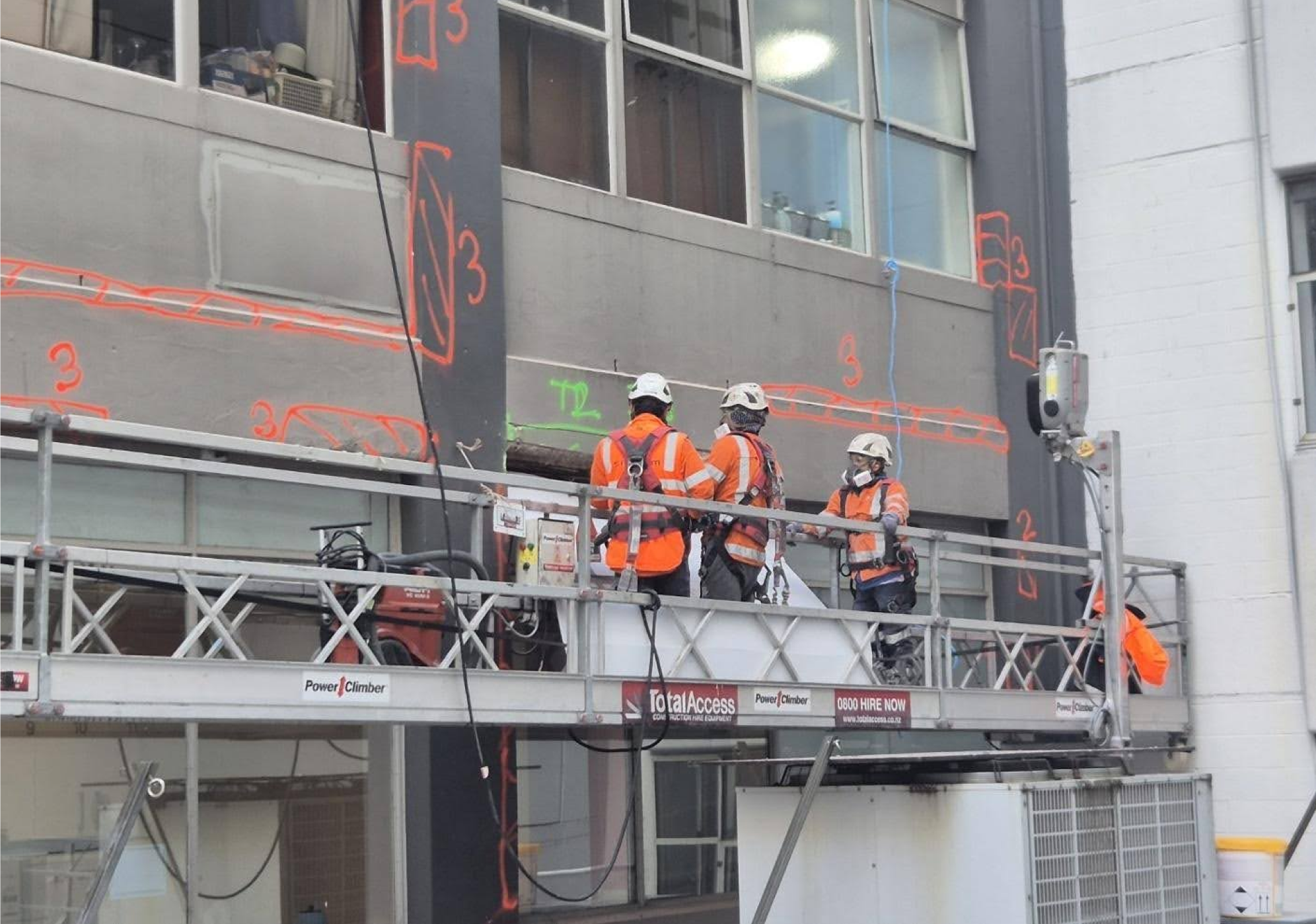
We begin with testing. That means taking real samples, checking carbonation depth, checking for chloride contamination, and confirming how far corrosion has actually spread inside the reinforcing steel. Louis Joubert, who has run diagnostic assessments on commercial buildings for over two decades, describes it simply: “We don’t guess. We drill, we sample, and we send it to a lab if we need to. You can’t fix what you haven’t actually measured.”
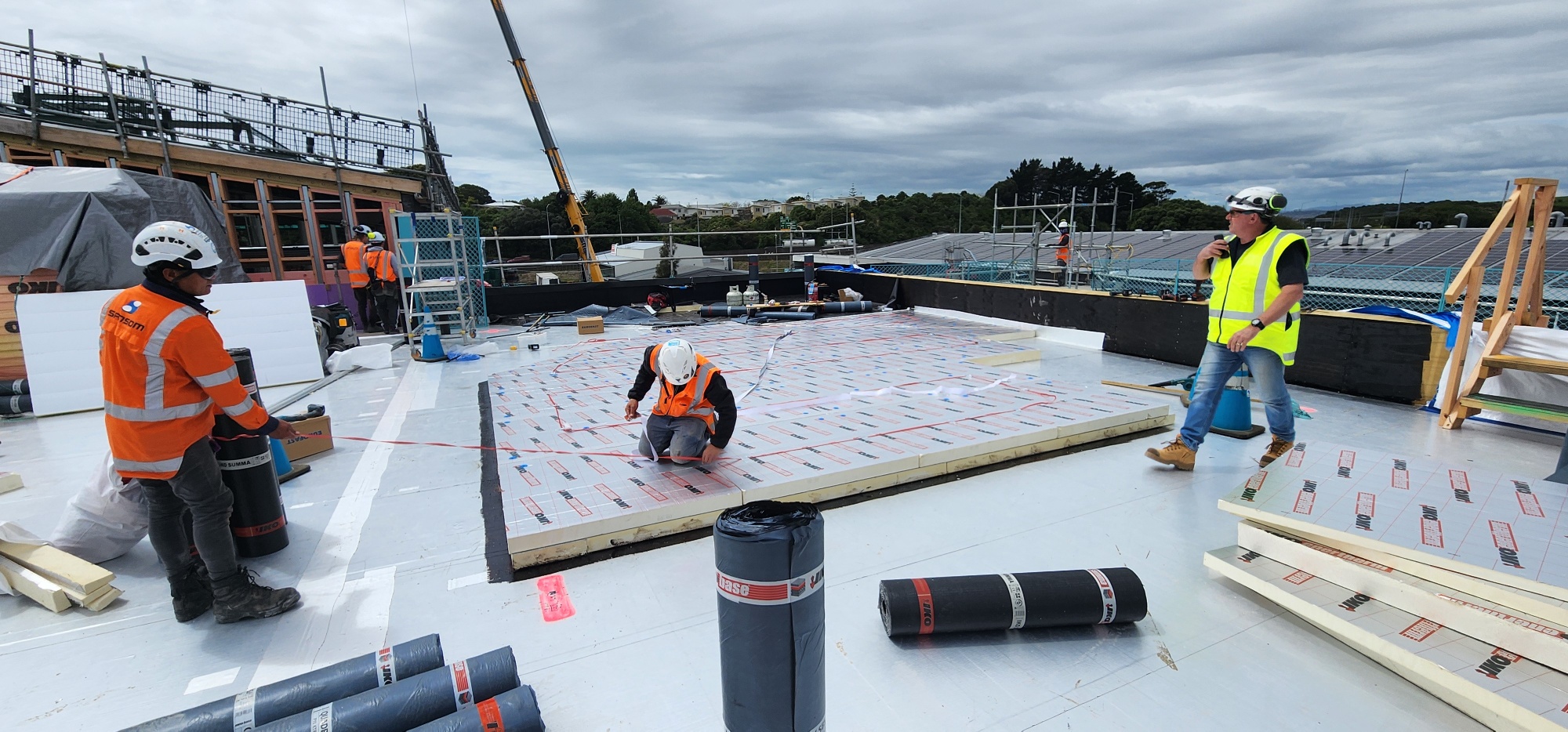
Once we know what we’re dealing with, we choose the material for the job, not the job for the material. We work with a small number of suppliers we trust, and we choose between their systems based on what the specific defect actually needs: the right repair mortar for a structural load, the right membrane for the exposure the building will face, the right injection resin for a crack that’s still moving versus one that’s stable.
“We’d rather use a smaller amount of the right product than a large amount of the wrong one,” he says. “Fixed scope matters to us. Get the thickness wrong, get the mix wrong, and you’re using twice what you need for half the result.”
Then comes the repair itself: removing anything unsound, treating the reinforcing steel directly if corrosion has reached it, rebuilding with the chosen material to the correct profile, and finishing to match the surrounding structure. Every step gets documented, because the next person who assesses this building, whether that’s in five years or thirty, should be able to see exactly what was done and why.
“A repair isn’t finished when it looks right,” he adds. “It’s finished when we can stand behind why it will still be right in twenty years.”
This is the process behind every job we take on, whether it’s a single column or a full building envelope.