By Stuart Tansey, PS1 Author – Below Ground Waterproofing
WDS (Waterproofing Design Specialist) CSSW (Certified Surveyor in Structural Waterproofing)
It’s been over a year since we published our thoughts on New Zealand’s outdated waterproofing standards and the critical need for change in our industry.
Last September, we detailed the industry’s frozen standards situation and the disconnect between what international best practice demands and what New Zealand provides. Before that, we highlighted how councils were rejecting Type C Protection applications despite designers recognising its importance as a warrantied remedial solution and new build contingency – a situation we found both frustrating and short-sighted given our climate.
Back then, we identified several key challenges: the lack of any unified standards, the absence of industry-wide guidance, the rejection of applications involving new and innovative systems, and the broader struggle to gain industry-wide support from councils, MBIE, and the Waterproofing Membrane Association Inc. (WMAI) for modern, design-led approaches.
So where are we now, a year on?
Progress
Today, we can say with confidence: things are moving.
There is genuine progress across multiple fronts. MBIE has continued engaging with the industry, even as their attention has shifted towards broader economic initiatives. While the momentum around advancing design standards has eased, the groundwork established over the past year is delivering tangible benefits, fostering greater industry awareness, stronger design integration, and more effective collaboration.
Type C Gaining Ground
We’re seeing a positive trend in the adoption of Newton Type C internal waterproofing, both in remediation and new builds. Whereas applications were often declined a year ago, councils are now engaging more constructively. Inspectors are asking questions, observing installations, and understanding the layered protection and contingency advantages of these solutions. This change from scepticism to comprehension is reflected in more designers specifying alternative solutions and councils taking the time to evaluate them thoroughly, a real step forward for the industry.
The Unofficial Standard
The industry is at a critical juncture. While many leading designers, developers, and contractors now reference BS 8102:2022 consistently, a familiar risk remains: selective interpretation. Some extract individual clauses without understanding their intent or broader context, undermining the standard’s purpose. True compliance requires seeing how each element contributes to the overall design, not simply cherry-picking what fits a budget or preference.
Encouragingly, there is a shift in thinking, from asking, “What product do we use?” to “What design outcome are we trying to achieve?” The challenge now is to engage the wider industry, not just major players, in adopting BS 8102:2022 as a consistent and recognised framework for below-ground waterproofing. There is no reason why this cannot happen.
Standards drive innovation, ensure consistency across designers, contractors, and manufacturers, and establish clear expectations and responsibilities. They also strengthen communication, resulting in more reliable, long-term waterproofing solutions.
Even more encouraging is that the industry itself is beginning to champion the standard. References to Types A, B, and C protection, along with environmental grading, are helping set client expectations and encouraging consideration of long-term factors such as changes in the climate, condensation, and humidity control.
Specialists, such as those at Sansom, Markham Global, Allco and more, are increasingly involved in early design discussions, bringing field expertise to the table. Contractors and manufacturers are sharing knowledge on effective products, emerging innovations, and practical solutions that address long-term challenges.
This shift in mindset is critical. It instils confidence in end clients and delivers long-term peace of mind, ensuring that below-ground waterproofing is not only compliant but resilient, reliable, and fit for the future.
Wellington Town Hall: A Design-Led Waterproofing Success Story
Few projects demonstrate the value of design-led waterproofing better than the Newton Systems project at the Wellington Town Hall, one of their most significant success stories of the past year.
Located on the riverfront, this heritage building is constantly exposed to Wellington’s harsh and unpredictable weather. The selected external system was immediately tested by the elements, and with its complex seismic detailing, some seepage was observed early in the build.
Fortunately, the design team had anticipated this possibility and incorporated a contingency by specifying combined protection, which included the Newton Type C system. The design accounted for the long-term risks associated with the building’s location, structure, complexity, and potential for defects. This built-in redundancy aligned with both BS 8102:2022 and E2.3.7, addressing the consequences of failure and the feasibility of repair.
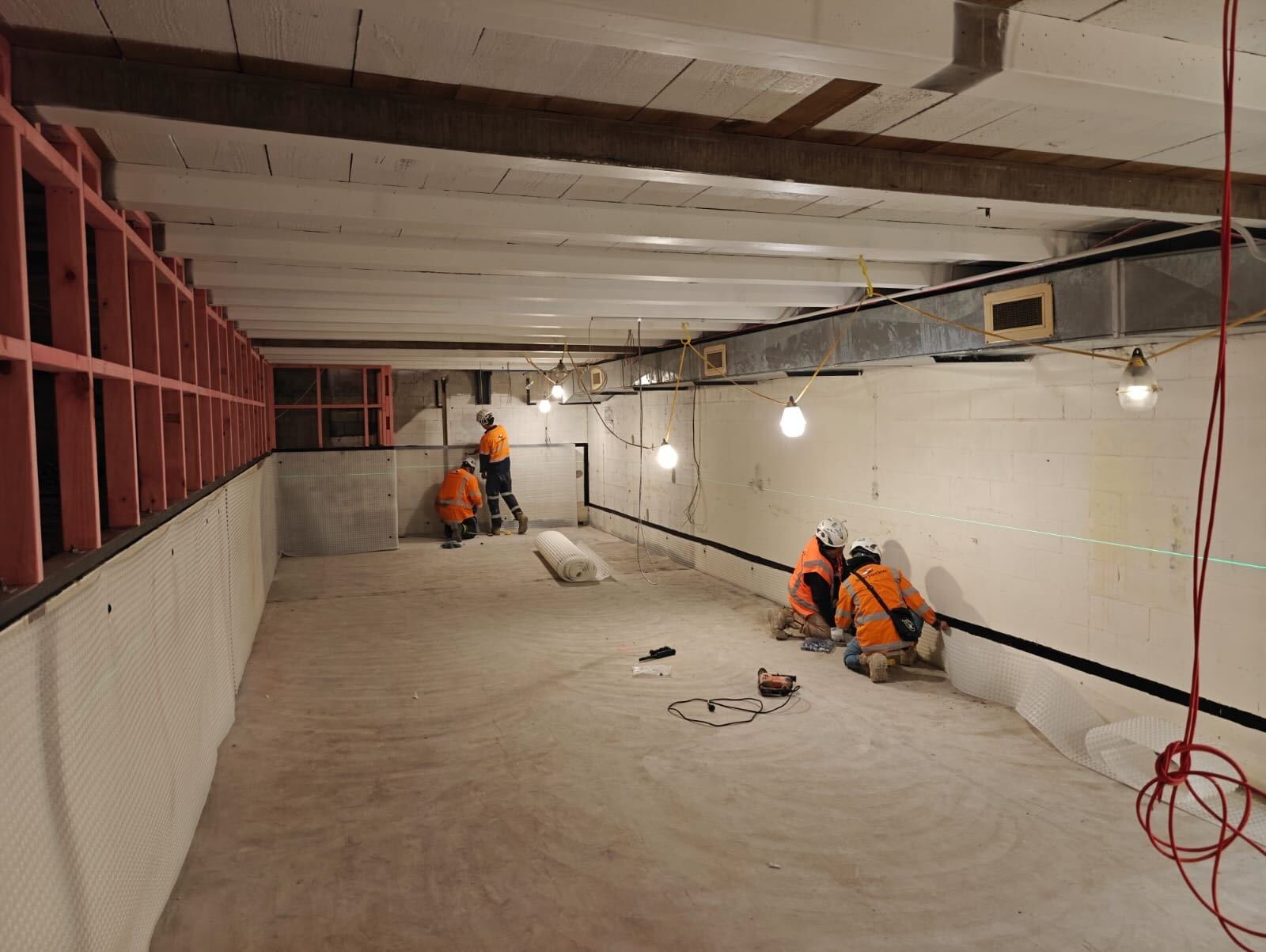
Once installed, the Newton system provided a discreet yet highly effective means of managing seepage. The basement remains dry and very close to welcome its new occupants.
A council visit during pump installation allowed inspectors to observe the system in action via the sump chambers, confirming a 100% defect-free result and reinforcing their confidence in the design-led approach.
We Still Have a Way to Go
New Zealand’s ongoing lack of a unified waterproofing standard remains a barrier to genuine progress. The prevailing “one-solution-fits-all” attitude stifles innovation, leaving designers and contractors with limited solutions and without a consistent framework to guide best practice. The UK’s revision of BS 8102 demonstrated how a robust standard can identify weaknesses, encourage improvement, and promote innovation in response to modern construction techniques, new materials, and climate-driven challenges.
In the absence of official standards, change is largely driven by individual specialists. Although this can be effective to a point, it results in inconsistencies between projects and allows less experienced practitioners to make key long-term decisions.
Groups such as the Waterproofing Membrane Association (WMAI) play an important role in driving progress within the industry. Their ongoing efforts to raise standards, educate, and improve the quality of waterproofing installations are continuing to make a real impact. However, much of the current focus still remains on product-based publications and manufacturer-led information.
We need standards and guidance that focus on design outcomes, not just specific products. Standards will provide confidence for designers, contractors, and clients alike. They create and encourage continuity, ensuring everyone is working from the same framework, understanding the same principles, and following best practice across the board.
To take the next step forward, the industry needs to build on the valuable work the associations are doing by developing more comprehensive design guidance, guidance that considers all waterproofing types (Type A, B, and C), how they interact within complex structures, and how they respond to a changing environment. A coordinated, design-led approach would push consistency across projects, support informed decision-making early in the design process, and ultimately deliver better outcomes for clients and the built environment.
Let’s be honest, few designers are eager to take on the responsibility of waterproofing. But we do it because it’s our job, it’s what we specialise in, and we take pride in doing it well.
The Insurance Gap
The UK waterproofing industry actively engaged insurance companies when updating the current BS 8102:2022, recognising their experience with claims and failures. This collaboration helped produce a standard that promotes confidence and aligns with the industry’s risk management objectives.
The system works well. In the UK, insurance companies require designers to follow standards that prioritise good design and long-term durability. In return, they provide insurance-backed guarantees to support these projects.
There are typically two types of guarantees: personal guarantees issued by installers, and insurance-backed guarantees administered through recognised industry groups. If a contractor goes out of business, the insurance-backed provider can appoint another qualified installer to honour the guarantee. This approach builds confidence across the entire chain, from designers and clients to insurers and contractors, while also helping to filter out pretenders and unqualified operators.
The key takeaway for New Zealand is that insurance companies could play a similar role if unified waterproofing standards were in place. Without such standards, the level of risk remains too high.
Until New Zealand adopts something akin to BS 8102, or develops a robust local equivalent, insurers will continue to remain on the sidelines. And without their participation, homeowners and building owners will remain exposed to poor workmanship and limited avenues for recourse.
What Still Needs to Happen
A year on, we’re in a better place, but there’s still substantial work ahead.
We need leadership. Drive the adoption of a unified standard, whether that’s MBIE, an evolved waterproofing industry association, or a collaborative effort between stakeholders. The current fragmented approach serves no one well.
We need a design-focused standard. One that provides comprehensive guidance across all key aspects of waterproofing design. This should include consideration of ground conditions, contamination, structural movement, Types A, B, and C systems, combination approaches, covered decks, potential failure scenarios, internal environmental conditions, climate change impacts, remediation strategies, surface water flooding and long-term durability requirements. Many agree that, with a few targeted amendments, BS 8102:2022 would serve as an excellent foundation for such a standard in New Zealand.
We need insurance industry involvement. This won’t happen until we have standards in place, but it’s critical for building confidence and protecting clients, especially in remedial situations where people have already spent thousands repeating failed solutions.
We need education and qualifications. Specialist designers need access to waterproofing-specific training. Installers need recognised qualifications. Specialists need seats at the table during design meetings, not just emergency calls when things go wrong.
The conversation is shifting from product to design, from quick fixes to long-term solutions. Larger players are specifying contingencies, considering both internal and external approaches, discussing the potential for failure at the start, and thinking about the long-term remediation measures.
Moving Forward
All in all, the outlook is positive, and the wheels are turning far more smoothly than they were a year ago. The industry as a whole is gaining momentum, with more specifications now referencing BS 8102. Designers are asking the right questions, and councils are becoming increasingly open to innovation, a significant shift from the blanket rejections we faced last year.
We need to build on this momentum. A unified standard remains an urgent priority. We’re tackling 21st-century weather challenges with a fragmented 20th-century regulatory framework.
At Sansom, we’ll continue to push forward, through CPDs, through ongoing conversations with industry groups, MBIE, and councils, and through success stories that show what’s possible when long-term design is prioritised over products.