DATE OF PROJECT 2025
LOCATION Grafton
MAIN CONTRACTOR Built Environs
The Auckland Hospital Plant & Tunnel Building project involved a comprehensive waterproofing solution, including basement tanking, tunnel waterproofing, coating works, façade sealant works, flashing works, and an extensive warm roof system. This six-storey seismically resilient structure forms part of New Zealand’s largest critical health services infrastructure development, providing essential utilities including emergency power, medical gases, water systems, and backup infrastructure designed to support hospital operations for decades to come.
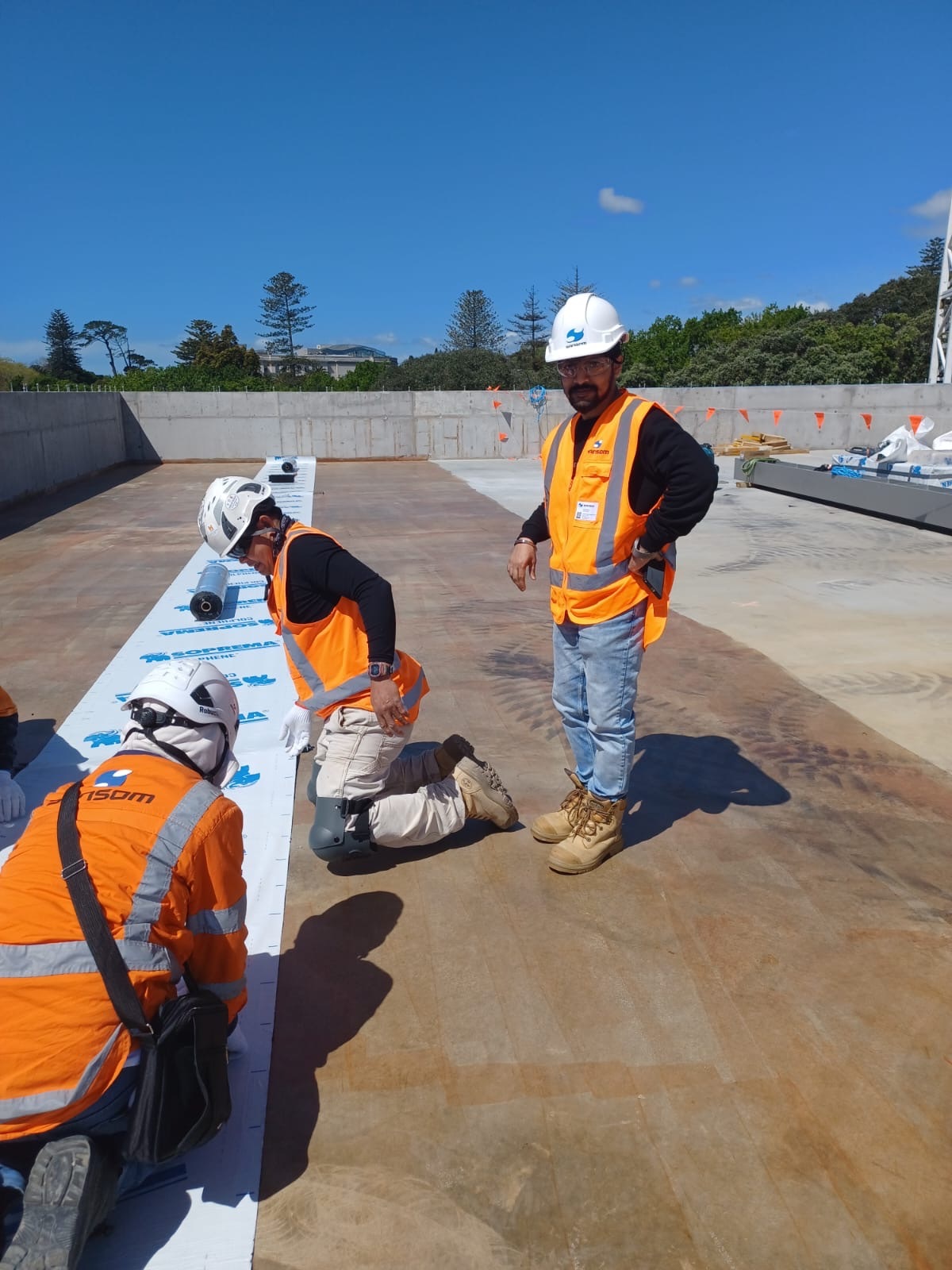
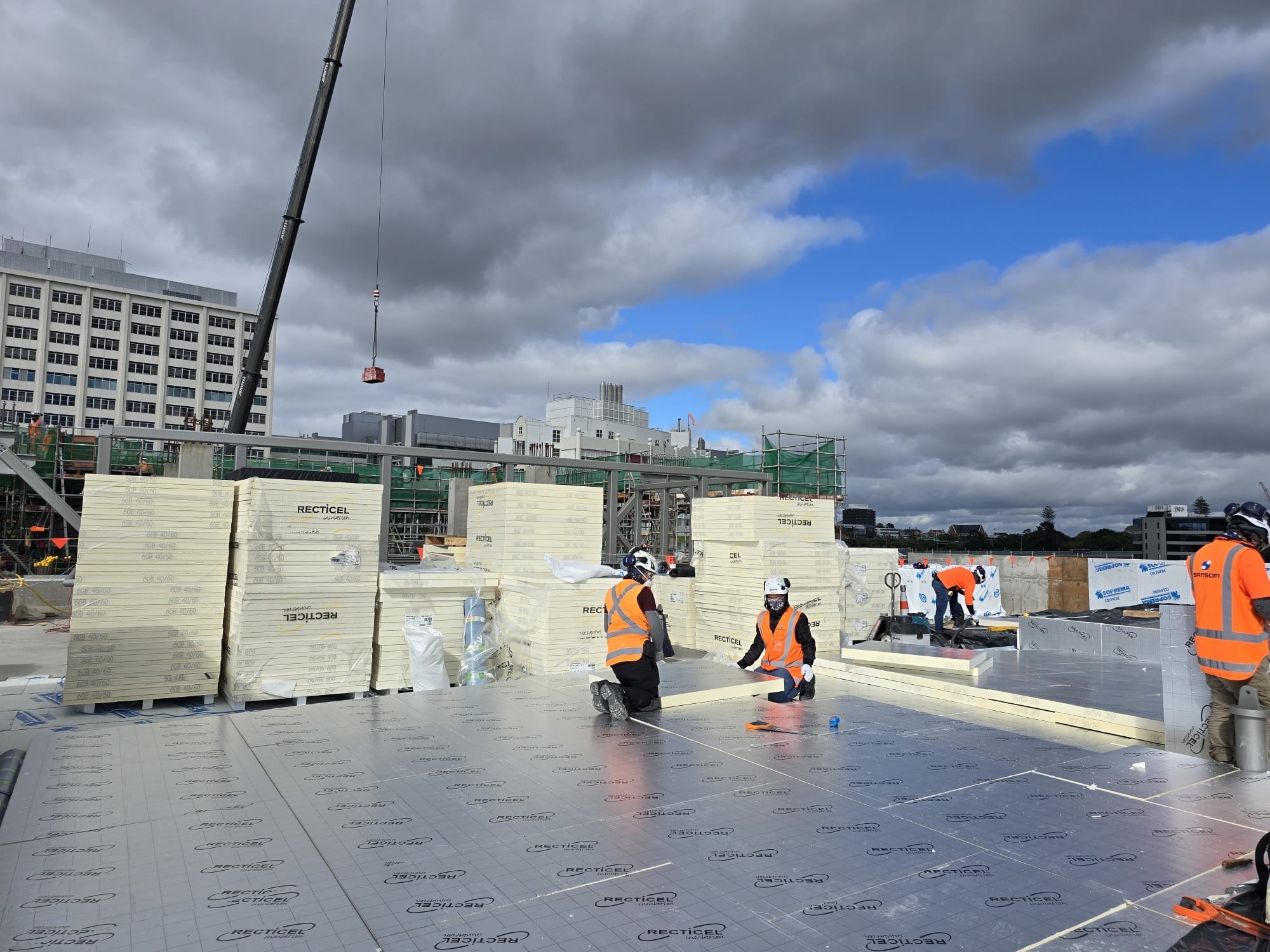
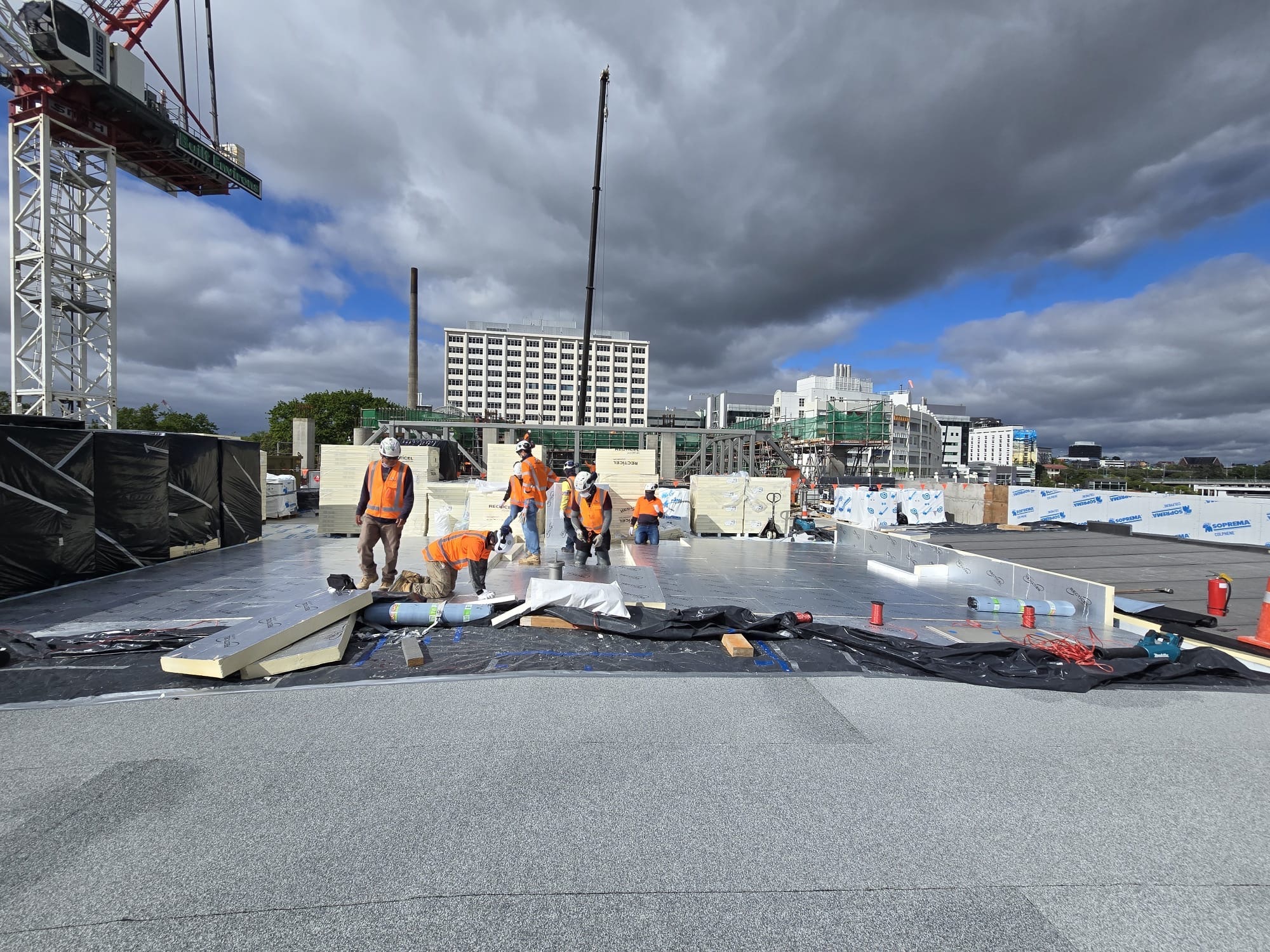
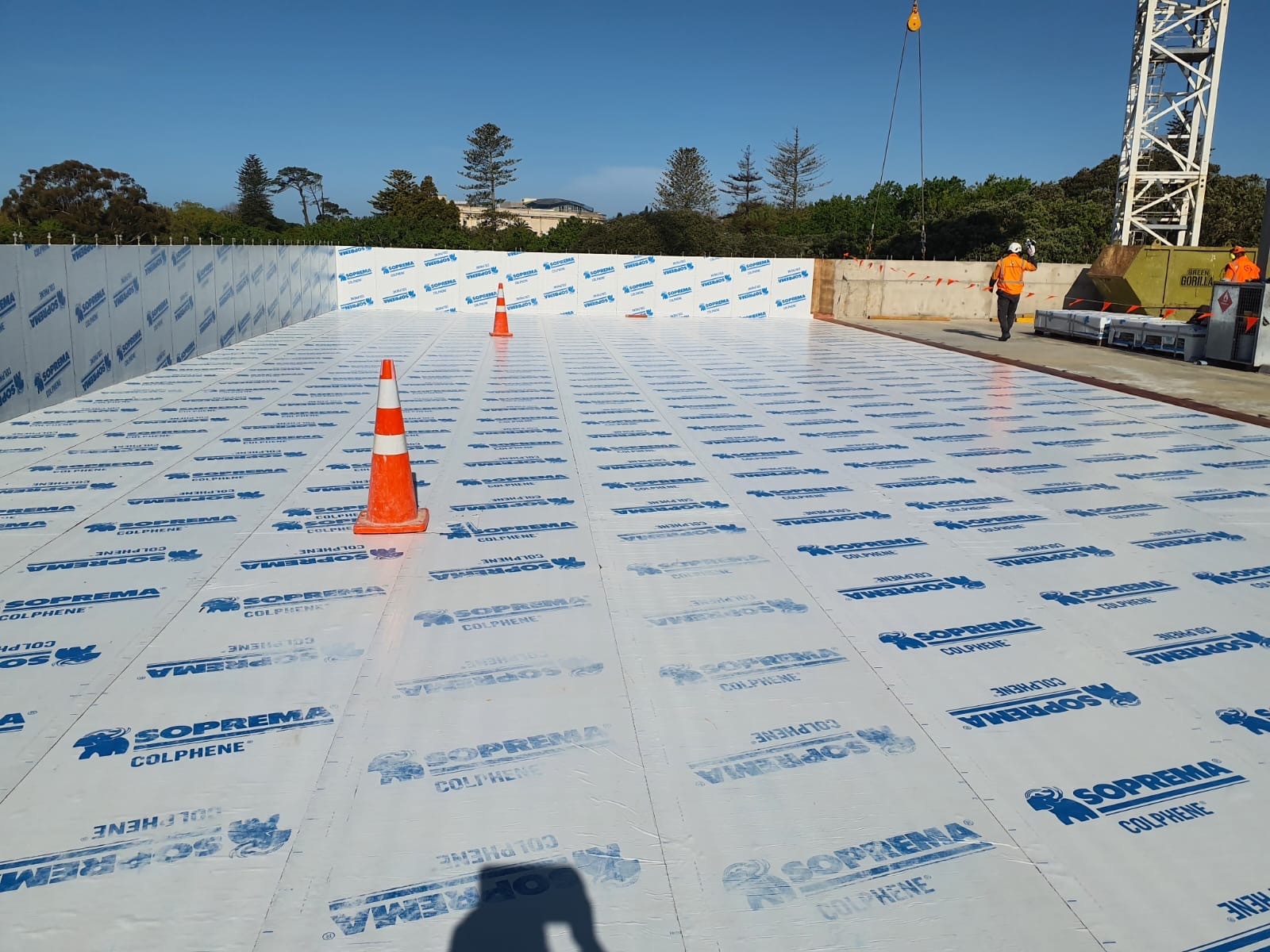
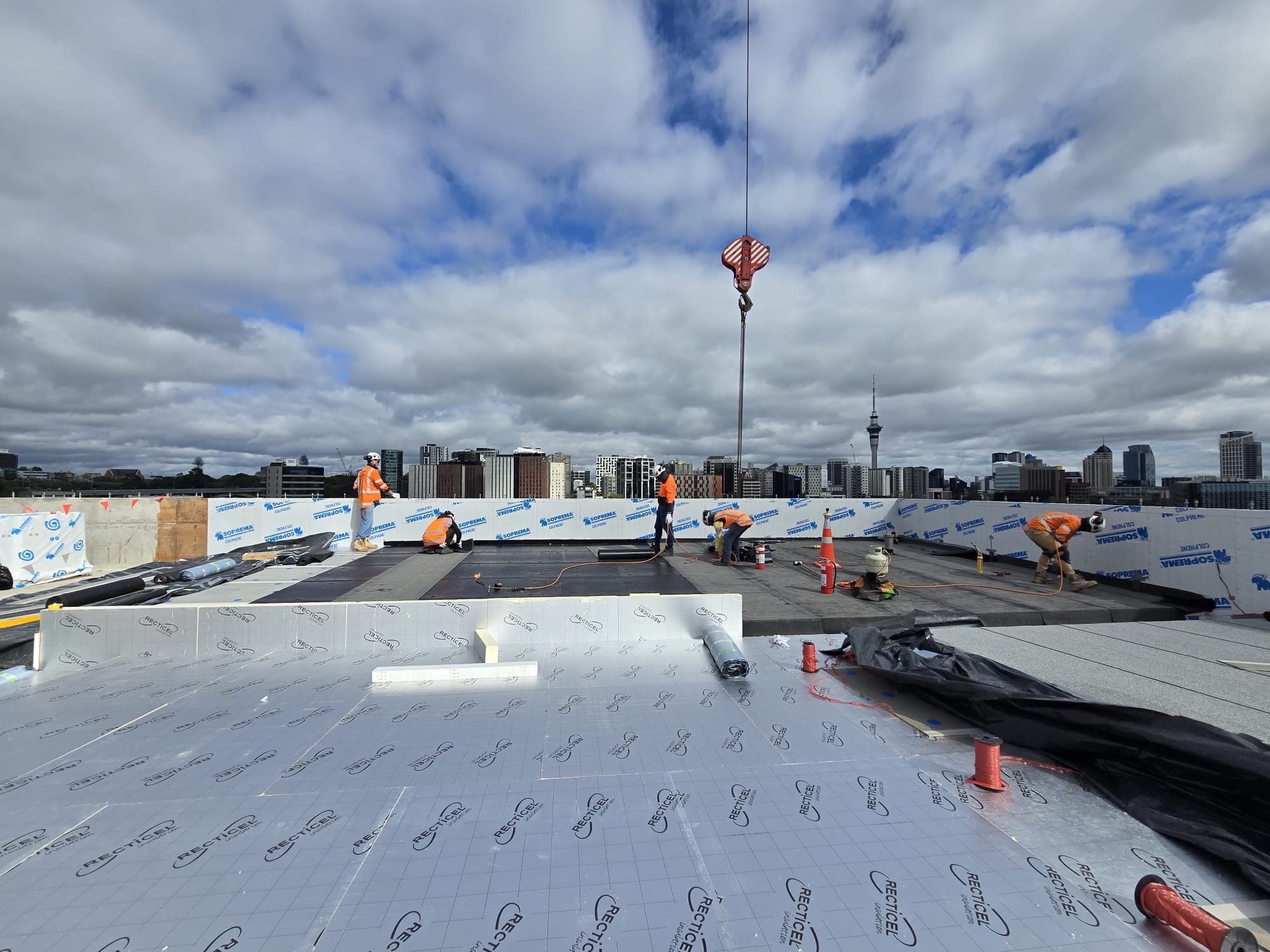
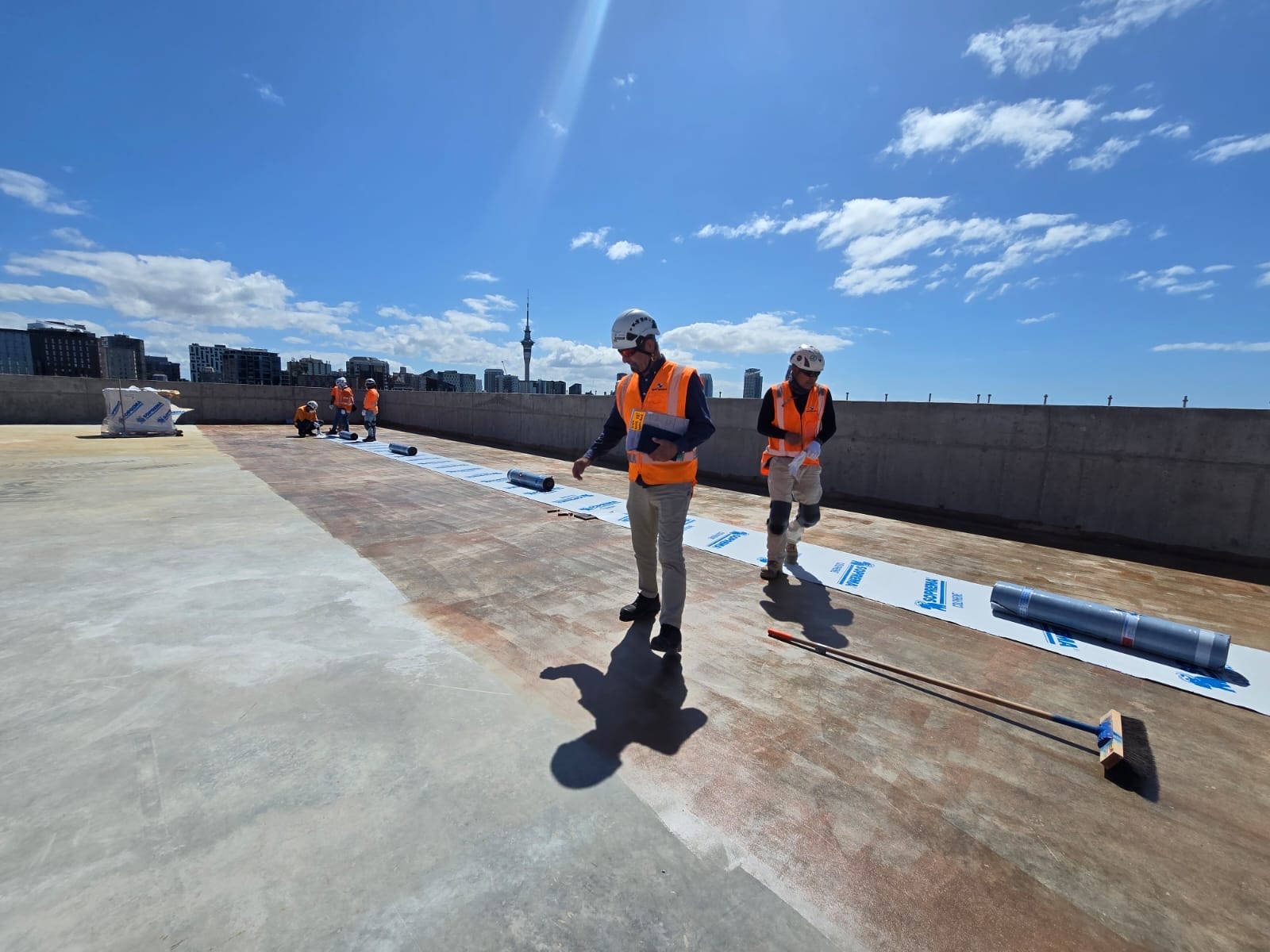
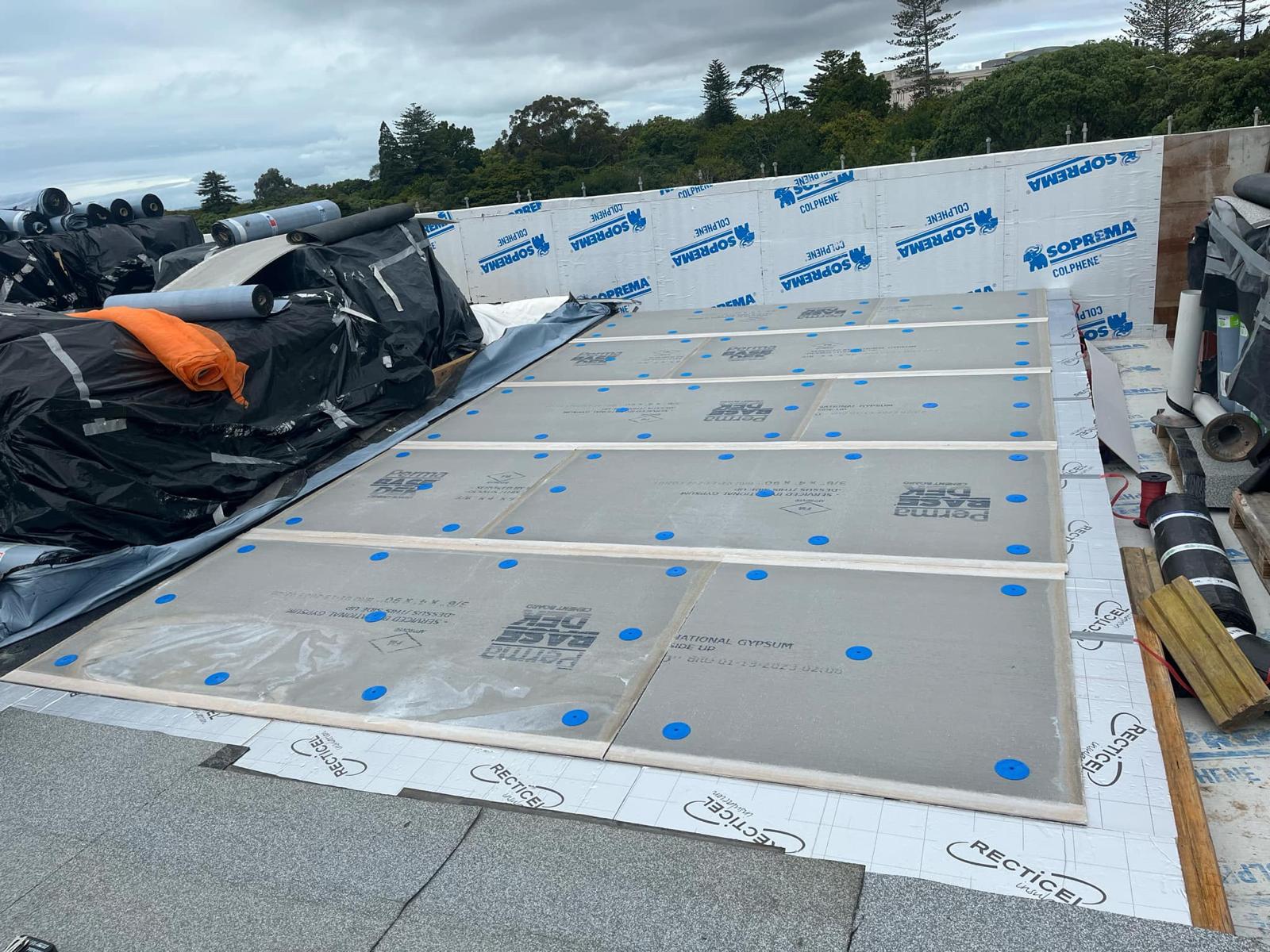
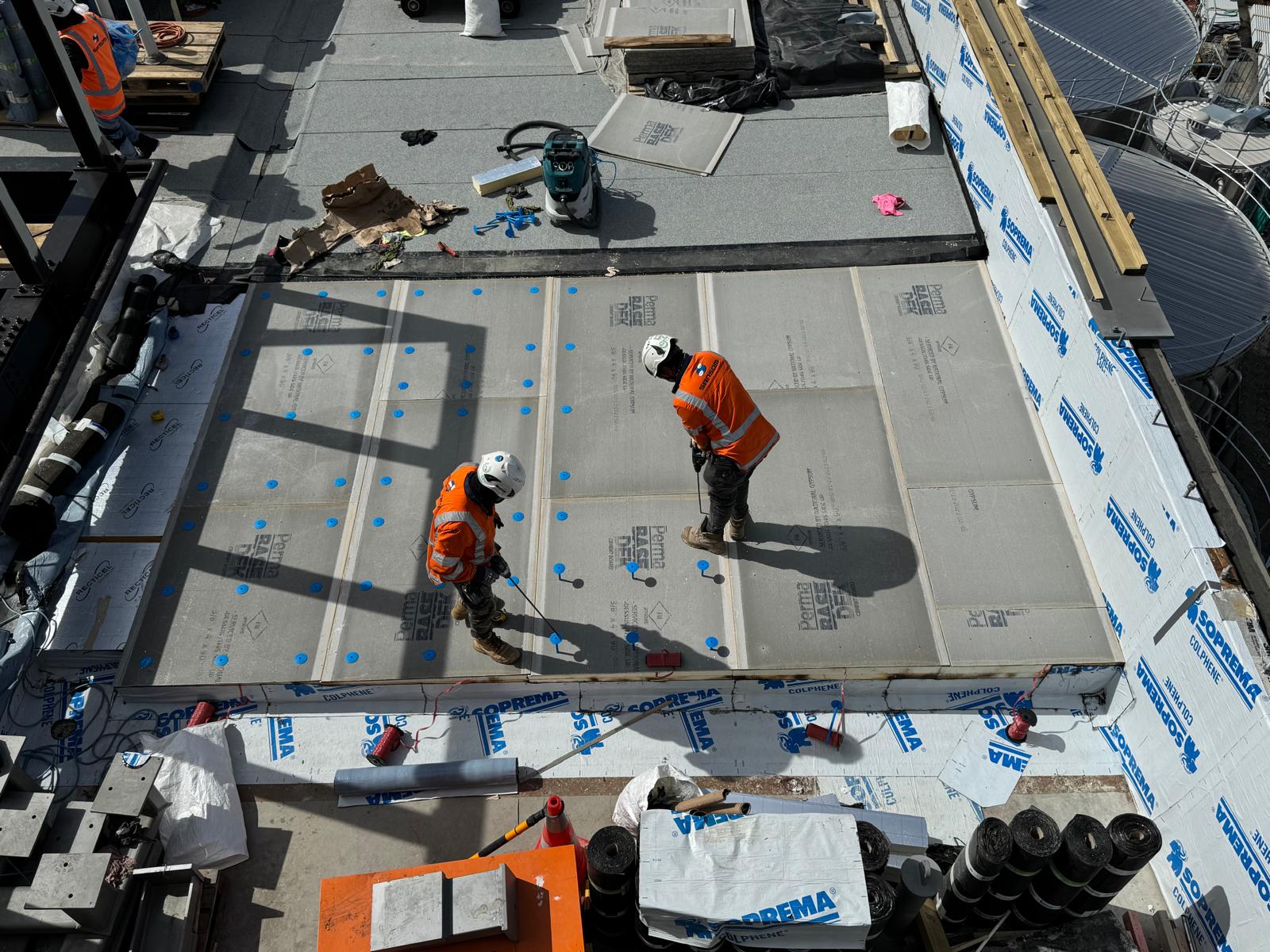
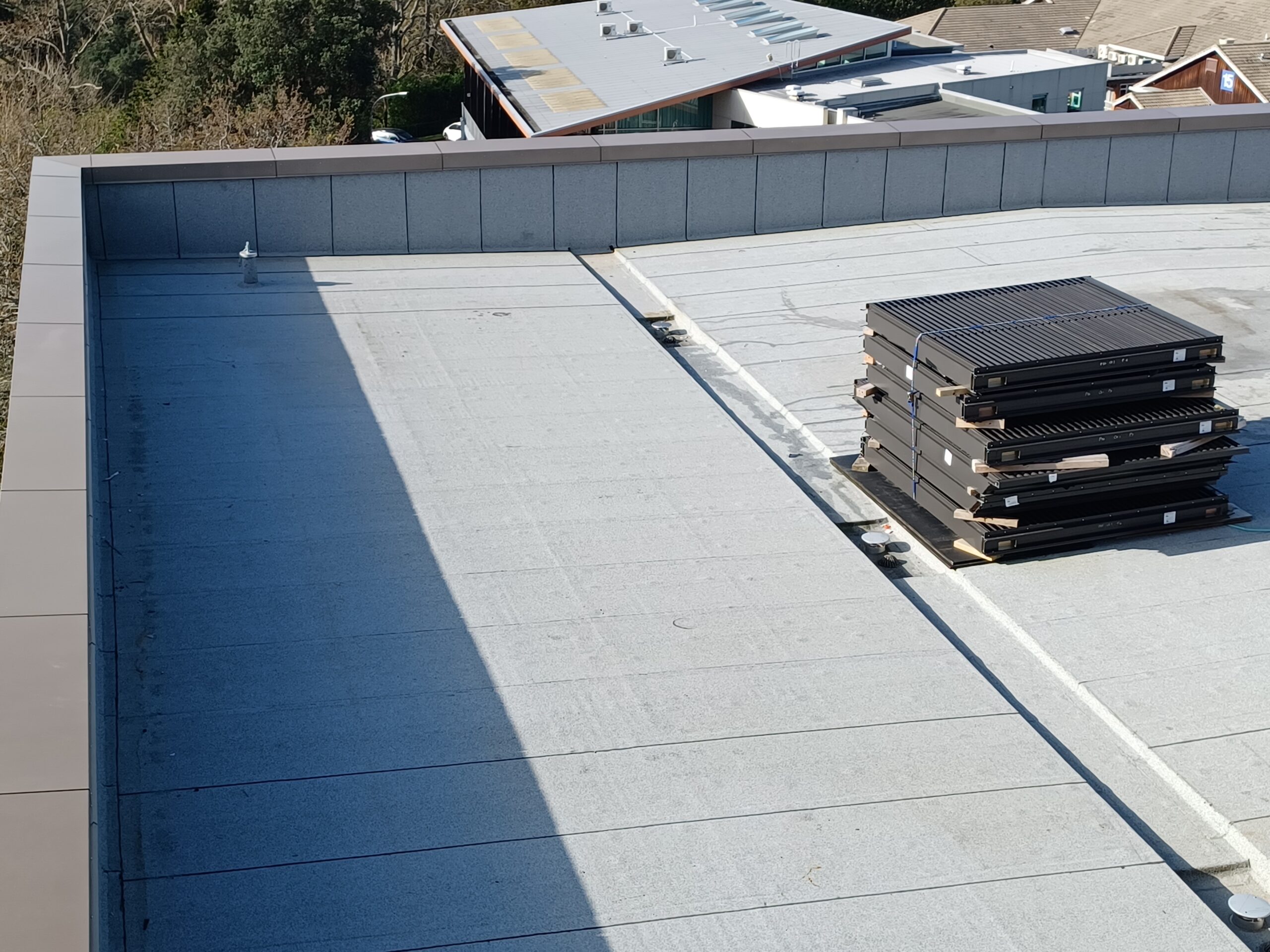
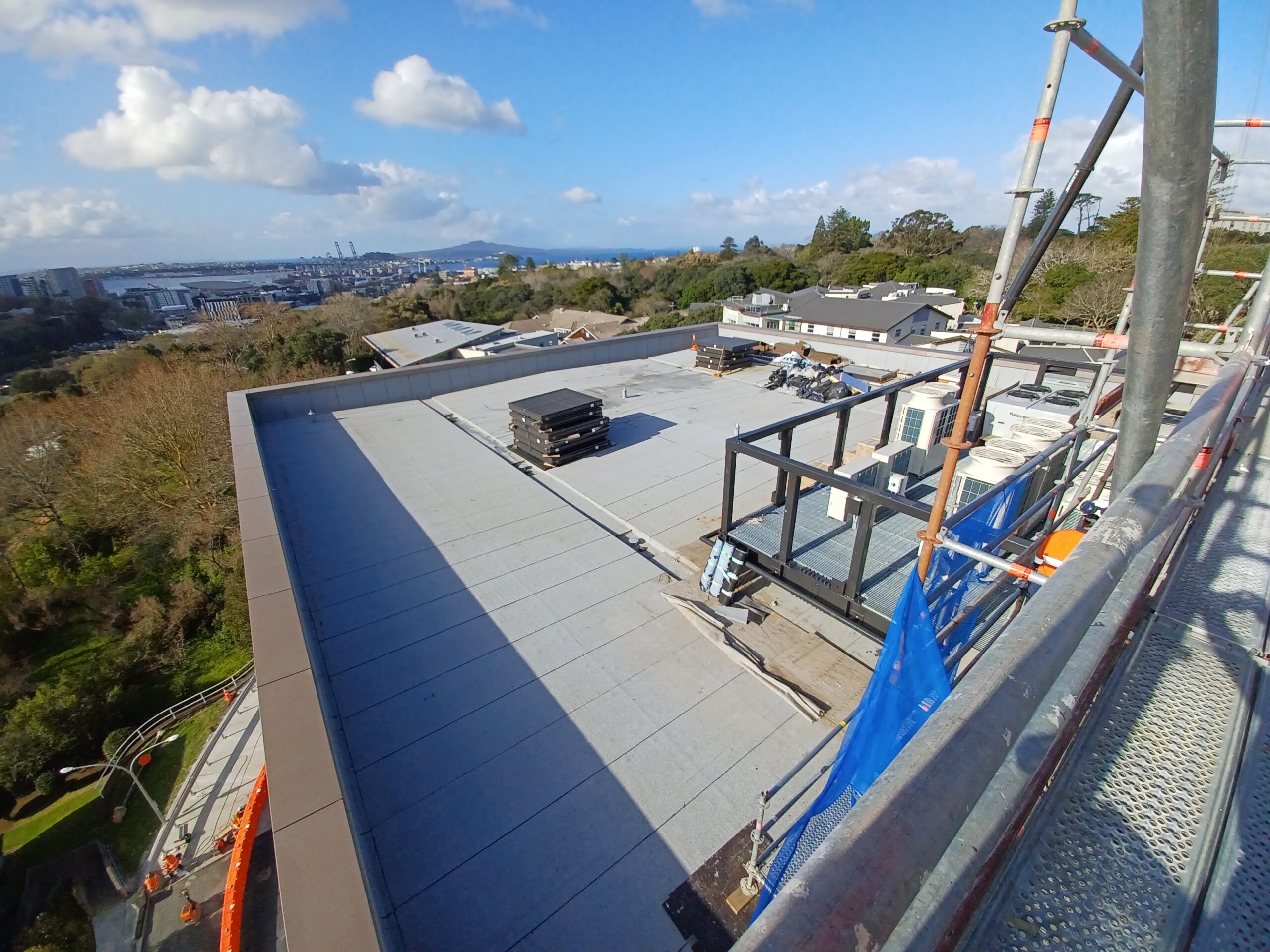
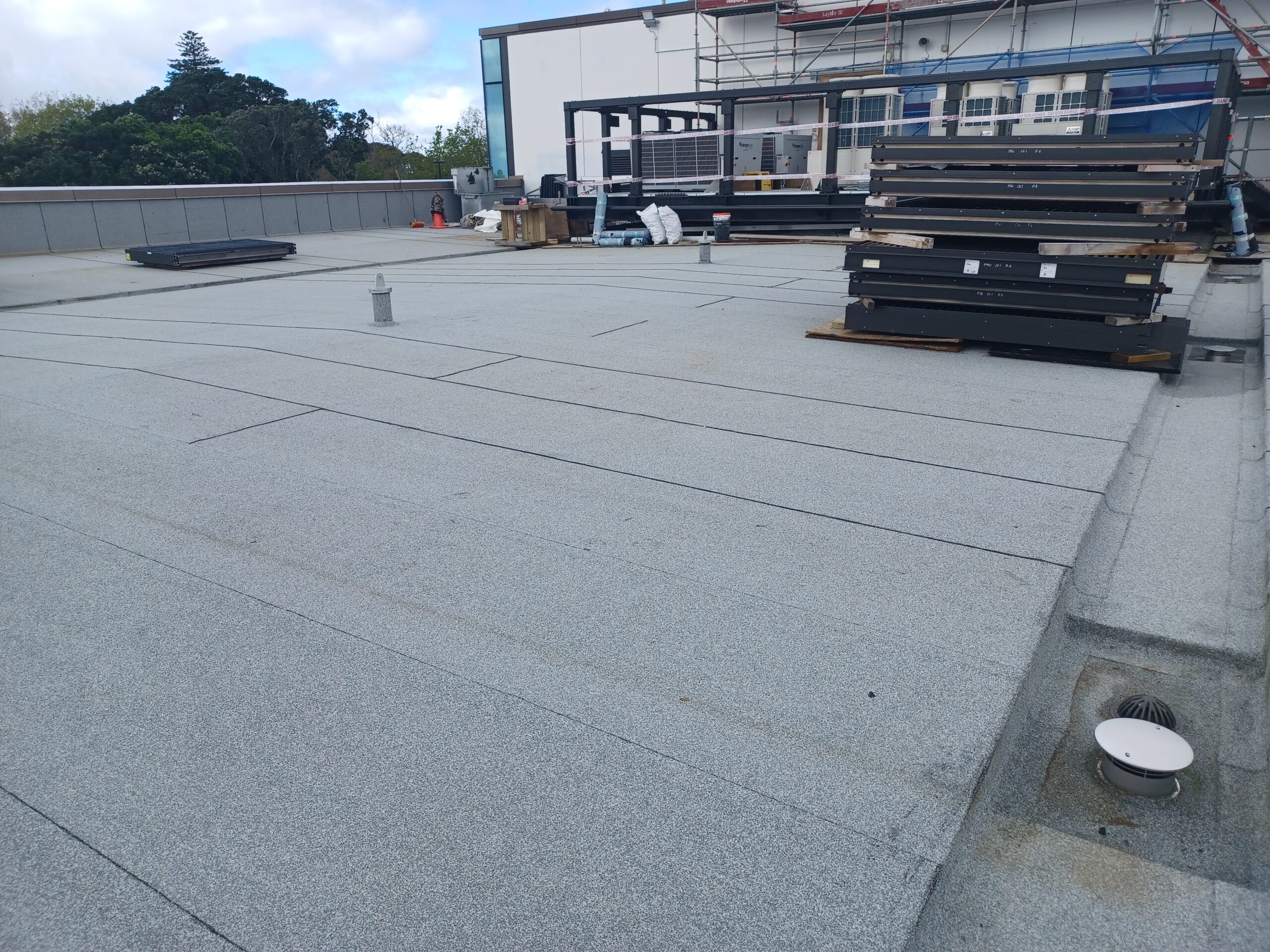
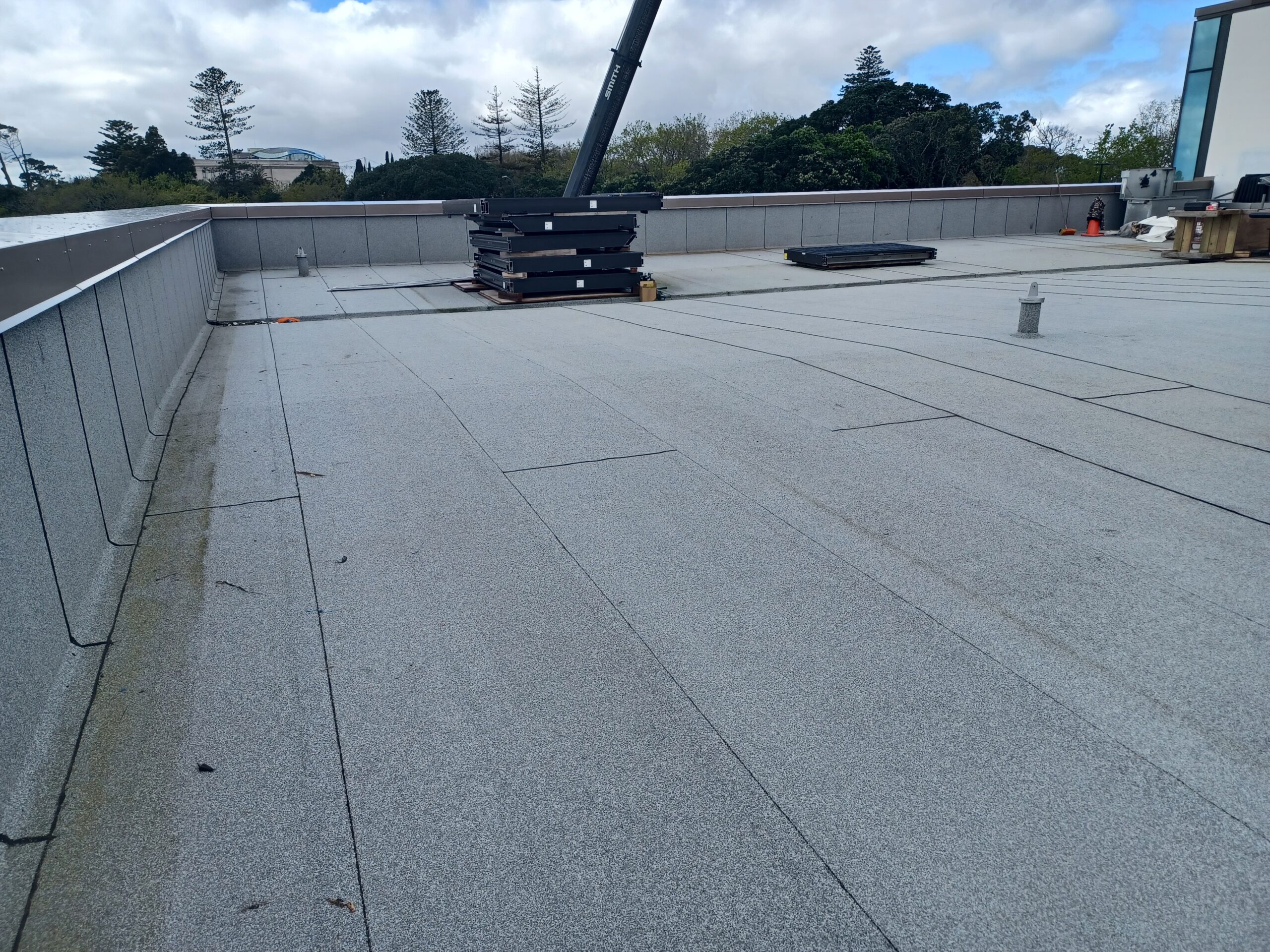
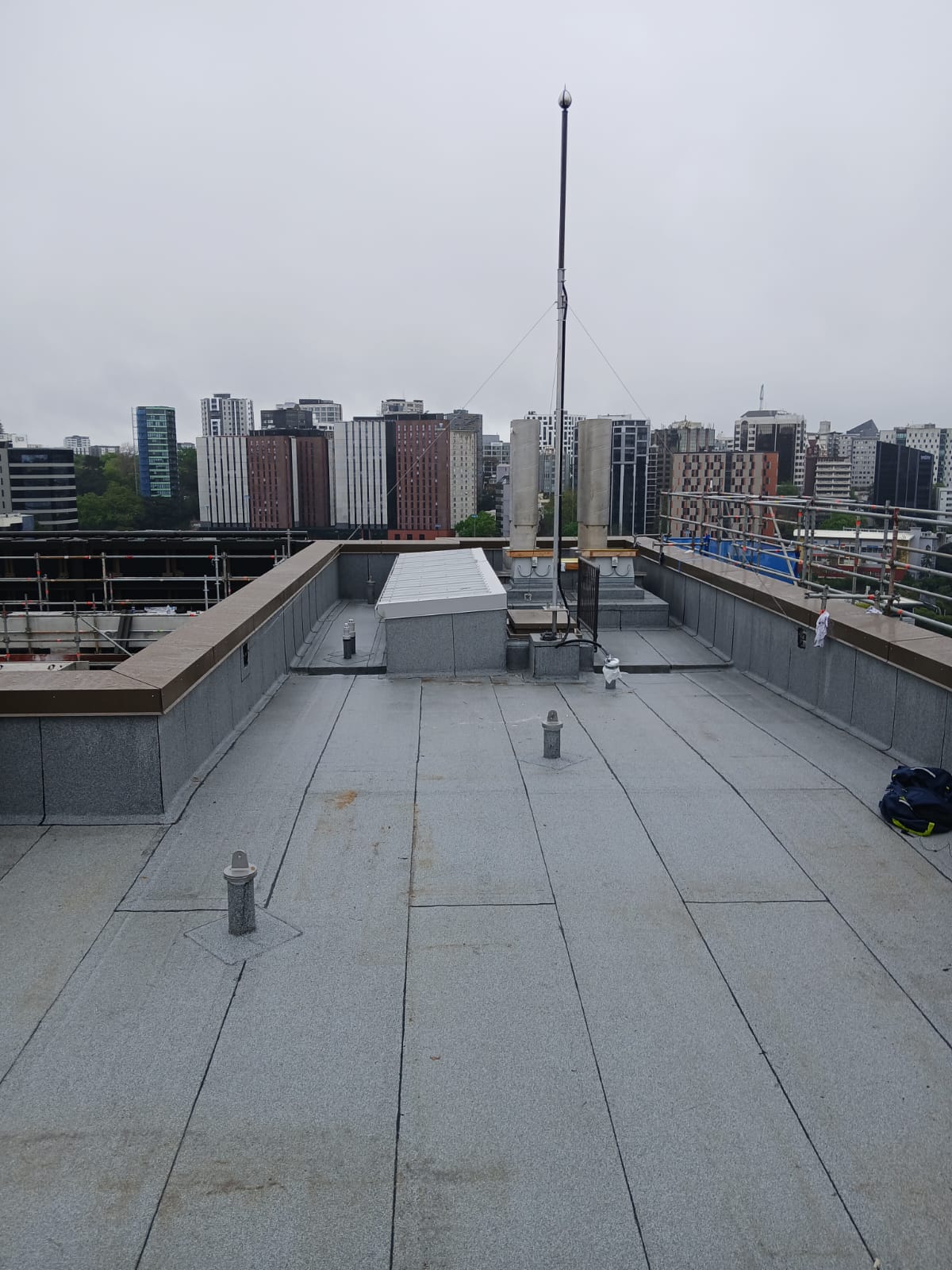
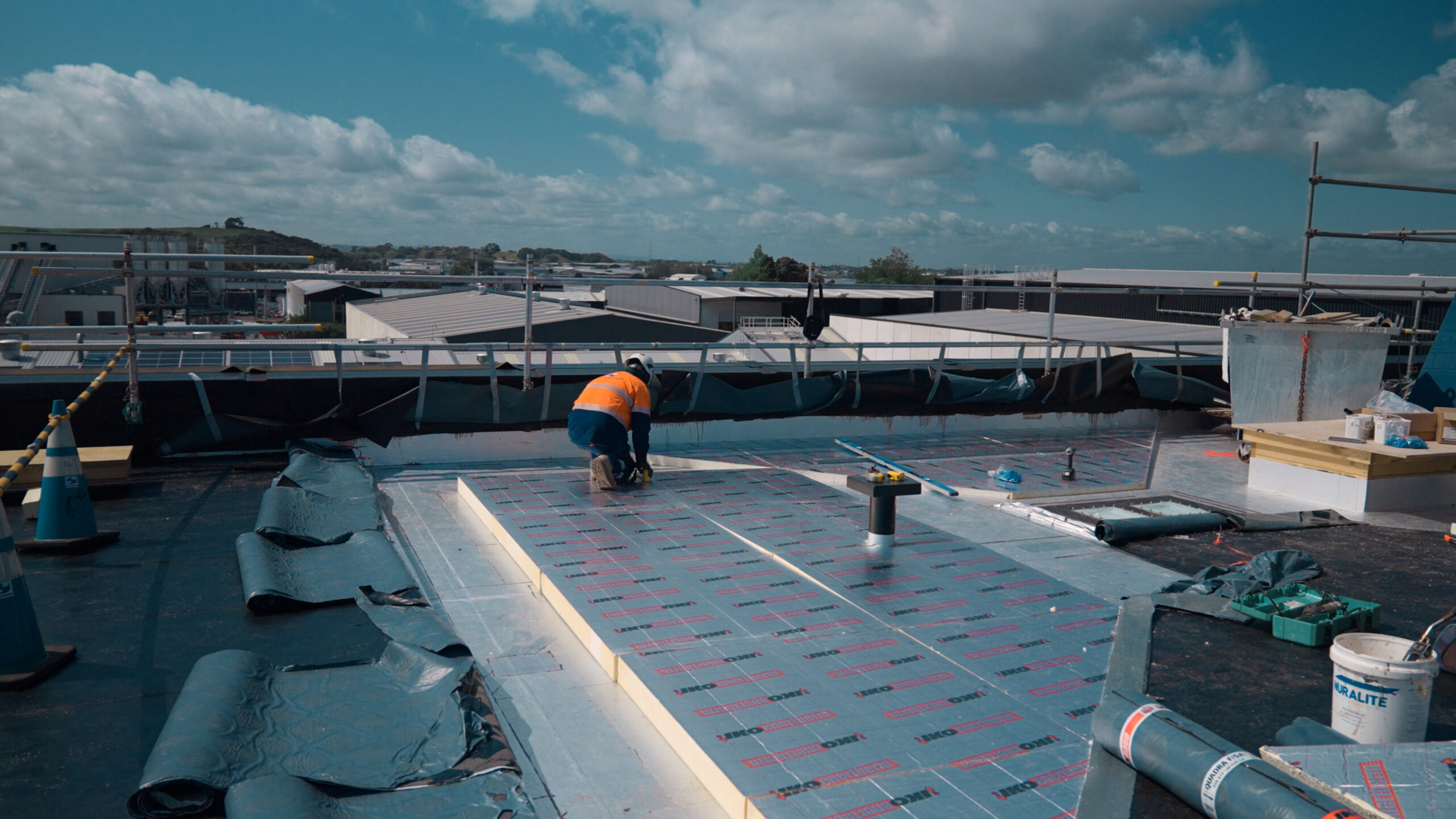
The roofing component represented the largest package across three trades, featuring warm roof installations on levels 4, 5, and 6 across approximately 2,000m², alongside applying liquid coatings to multiple plant rooms.
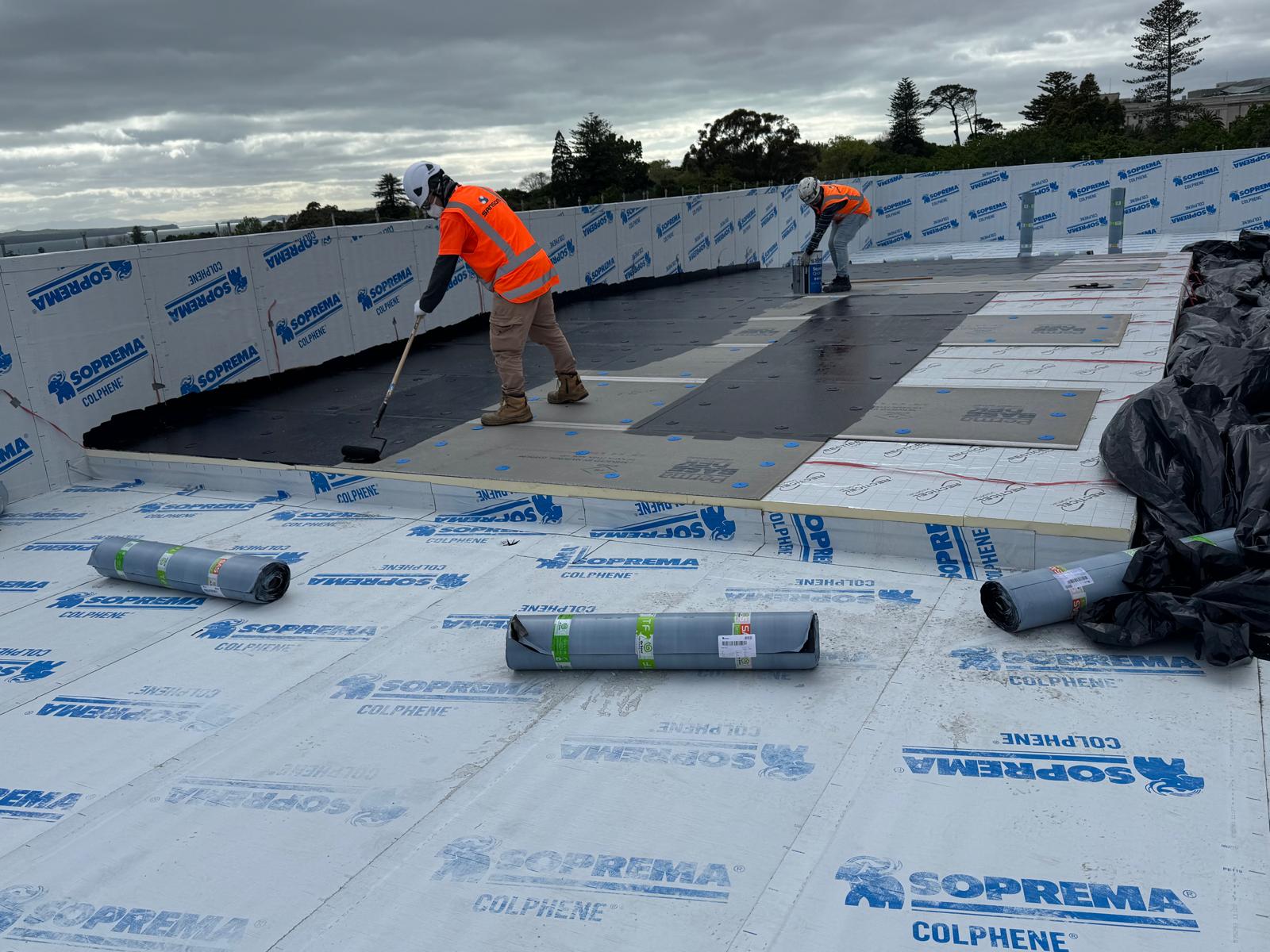
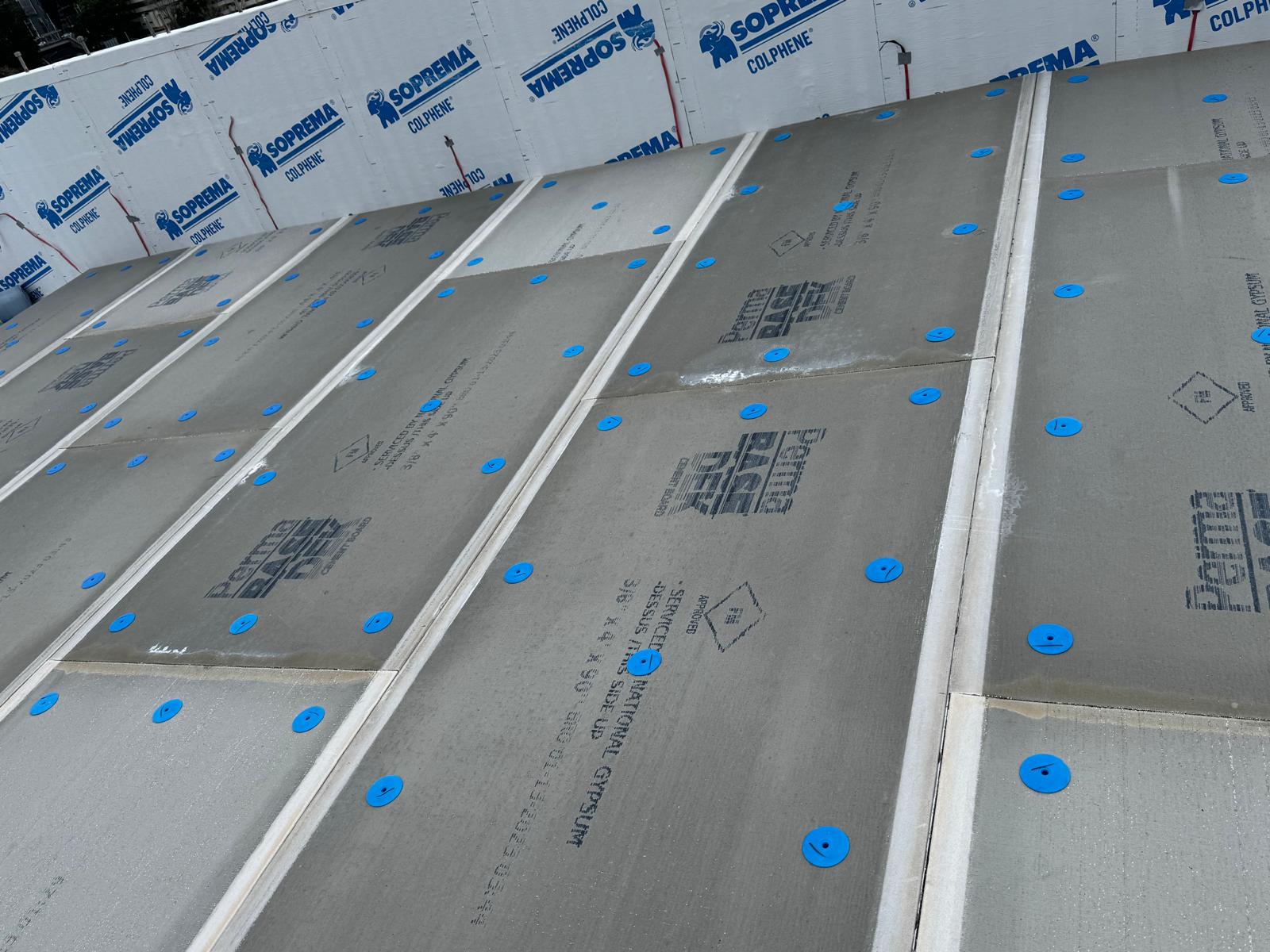
Housing services, mechanicals, and heavy machinery, the project required a tapered warm roof design with insulation achieving required R-values, and incorporating unique specifications, such as spray-applied coatings for chemical spillage protection installed over the completed warm roof membrane.
Sansom previously worked with Built Environs on the successful delivery of the Auckland City Mission project at Hobson Street. The same team demonstrated excellence both commercially and on-site, building strong relationships that transferred to this project. Combined with the Built Environs’ team’s existing relationship with Sansom, this led to our involvement in the basement tanking and tunnel works at Auckland Hospital Plant & Tunnel Building.
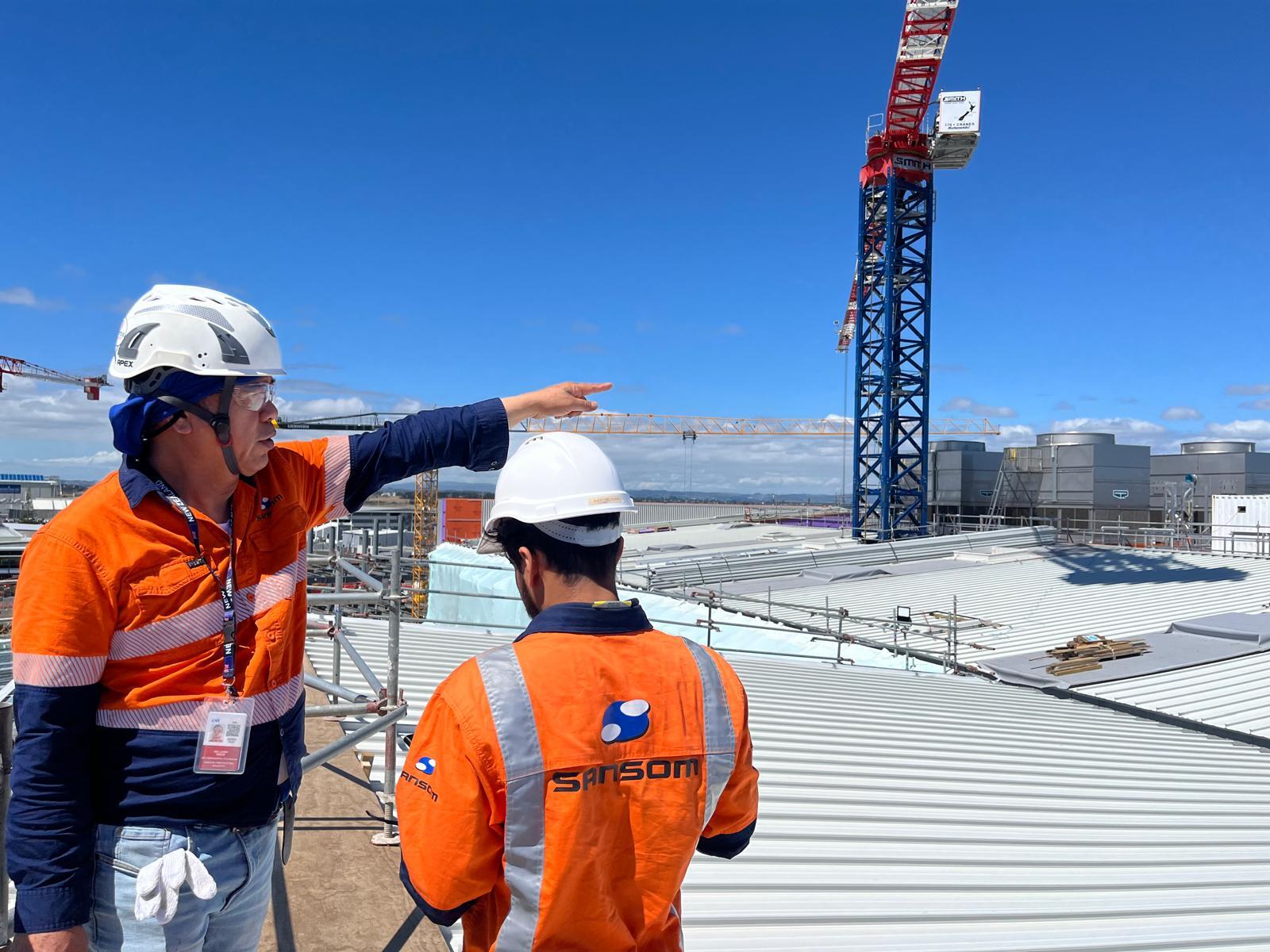
While the tanking and tunnel works were happening, the roofing procurement and design discussions were going in the background. Later on, the roofing and facade works were added as variations to our existing tanking contract. Our contracts manager led a team of six specialists throughout the project, working closely with Built Environs’ onsite team. The warm roof system covered three levels with tapered falls, requiring significantly more labour-intensive installation due to the complexity of the design and the nature of the roof.
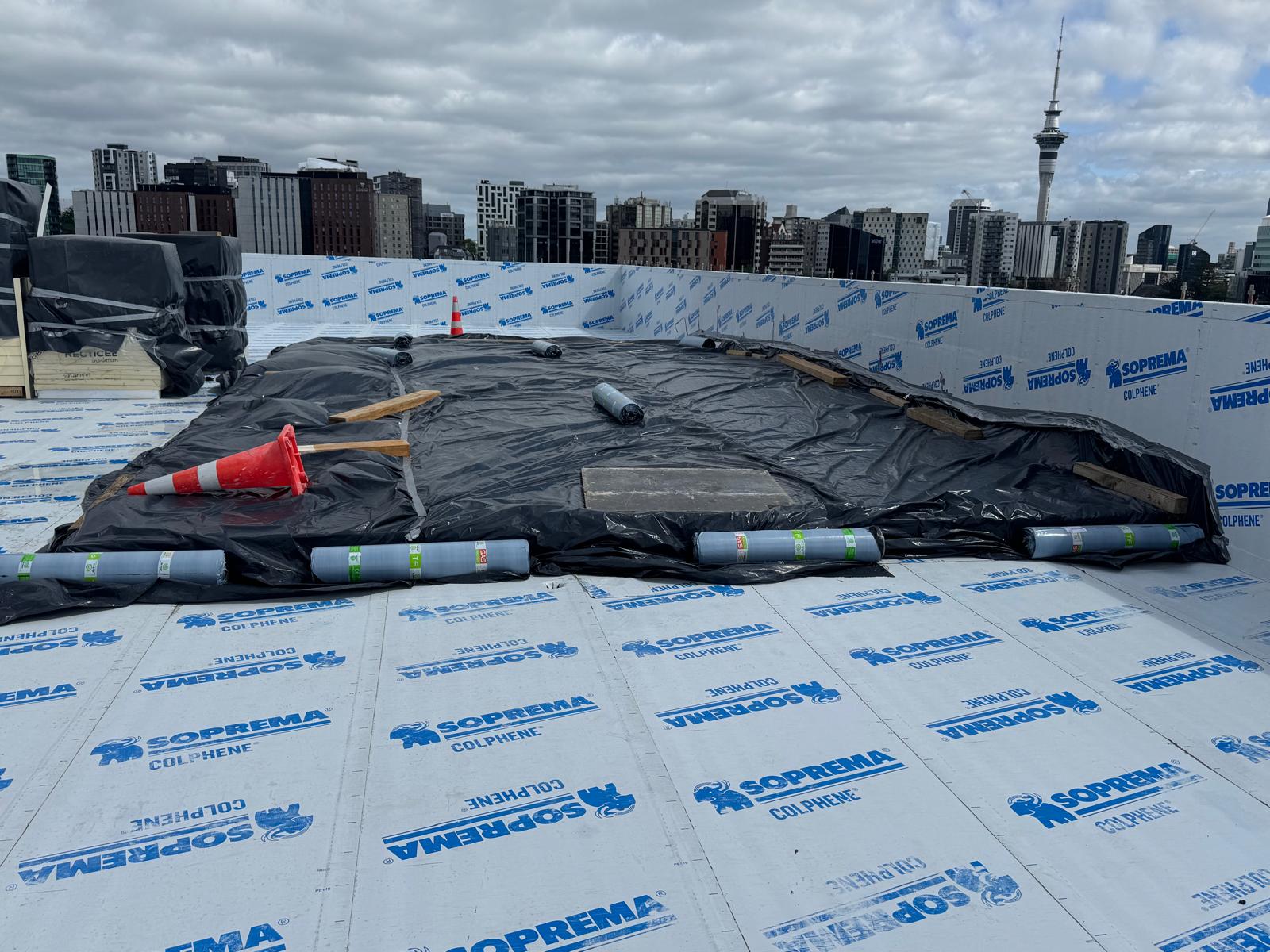
Weather Protection and Programme Management: The client’s decision not to use shrink wrap created significant programme risks. To mitigate this, our team implemented daily temporary termination of the membrane regardless of weather conditions, ensuring no water ingress overnight. While it required additional labour, it protected quality and reduced water ingress risk.
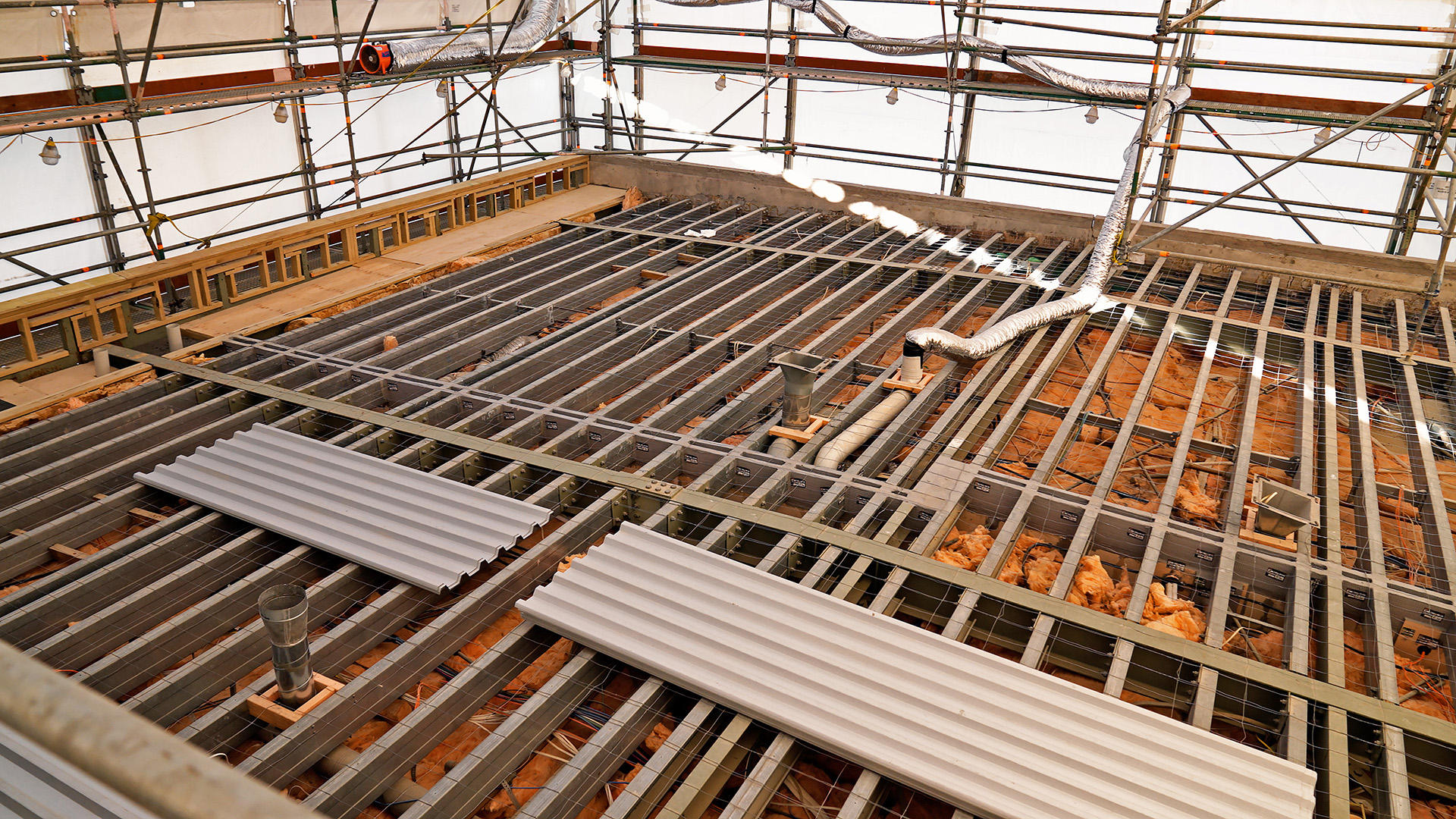
Confined Installation Under Steel Structures: The timing of steel structure installation meant approximately 60% of the warm roof area had to be installed under the steel frame. Although the confined environment resulted in reduced productivity, we managed to communicate with the site team and adapted our methodology to work around these steel structures efficiently and safely without any impact on the quality of installation.
Material Supply and Storage: With three-month lead times for insulation boards, we worked closely with Built Environs to establish storage areas on individual levels. Coordinating material movements and crane access required careful planning, but the client’s proactive support in providing space helped maintain workflow.
Trade Protection and Coordination: Multiple trades working above the membrane created ongoing waterproofing damage concerns. Built Environs installed temporary protection systems, and we maintained constant communication through email reminders and site coordination. Our team provided guidance on load distribution and acceptable storage practices.
Design Development: Where architectural details were incomplete, we adopted a solutions-focused approach, proposing practical details based on our expertise rather than simply flagging issues. This accelerated the approval process and maintained momentum. Comprehensive pre-commencement meetings with all stakeholders helped identify and resolve potential issues before work commenced.
Complex Detailing: All detailing around plant equipment, steel structures, columns, and penetrations required liquid application involving multiple coats – a labour-intensive process requiring multiple site visits as construction progressed in stages.
The warm roof installation is almost complete. Monthly consultant inspections consistently confirmed quality standards, with no major critical items flagged throughout the two-year warm roof project duration.
The architects (Jasmax) expressed satisfaction with our reporting structure and proactive approach to problem-solving. The strong relationship developed with Built Environs’ teams resulted in smooth coordination without major disagreements – a testament to clear expectation setting through comprehensive pre-start planning.
Our team’s ability to scale resources when the programme demanded was critical for the project’s success. The commercial team’s proactive communication kept all parties informed of variations and costs, eliminating surprises and maintaining trust.
This project demonstrates Sansom’s capability to deliver complex warm roof systems while maintaining quality and strong client relationships despite challenging coordination requirements.